
IMPTRON TESTING SOLUTIONS
CLIMETRON
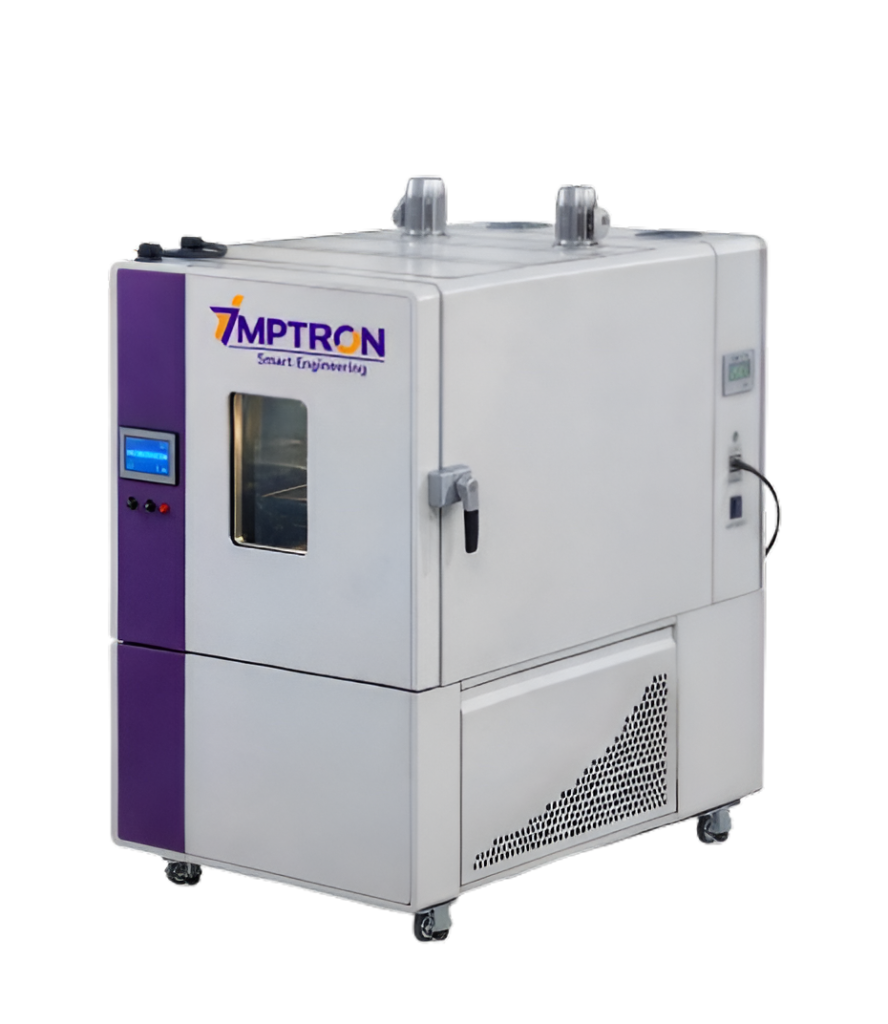
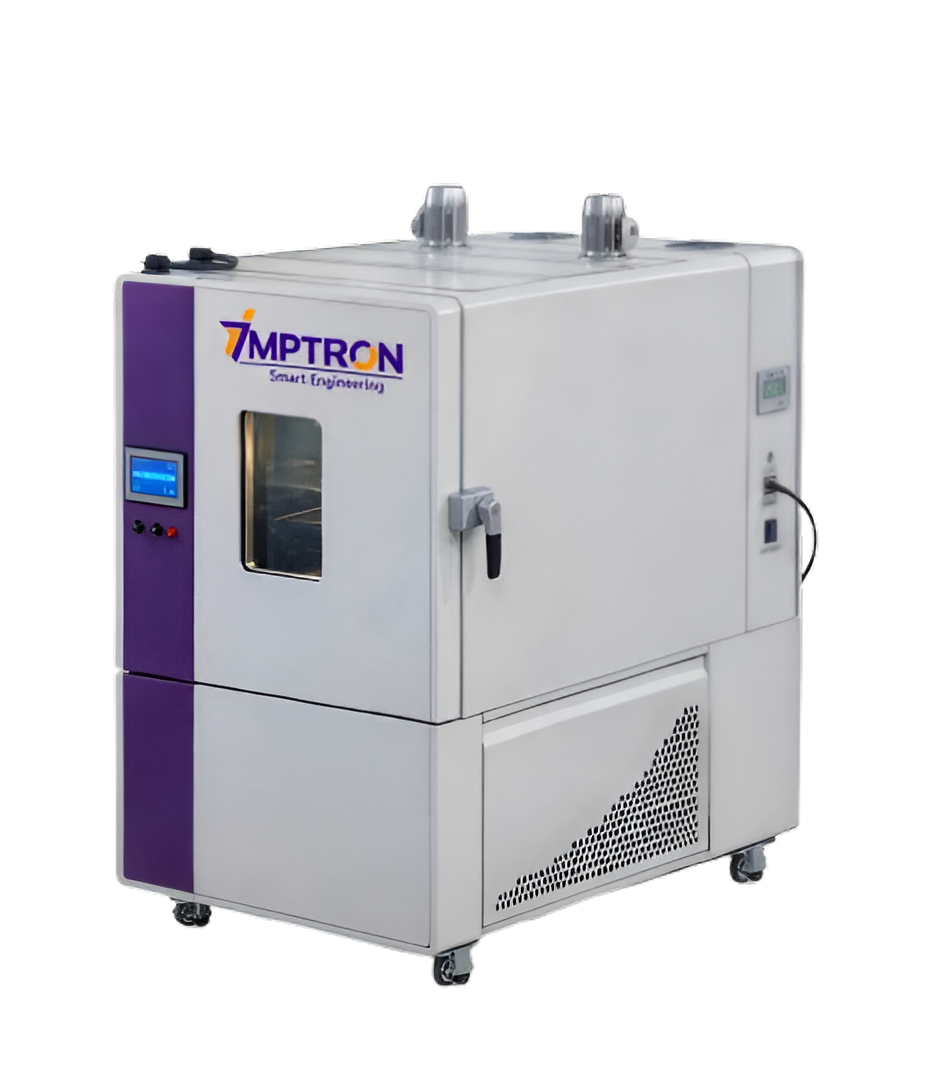
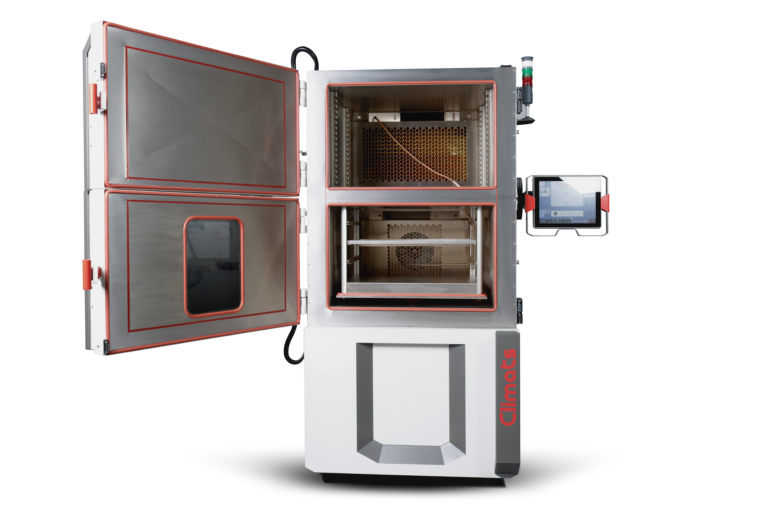
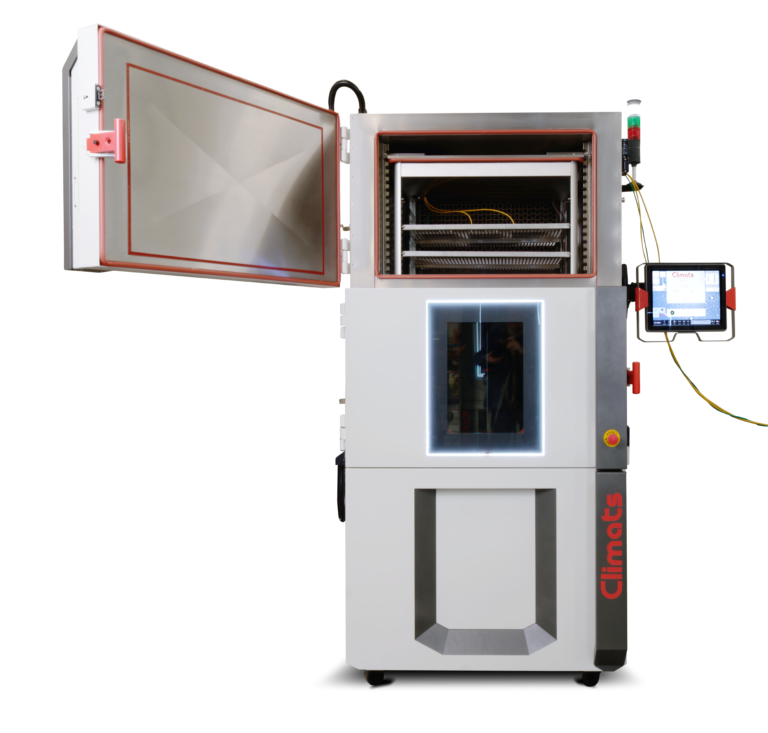
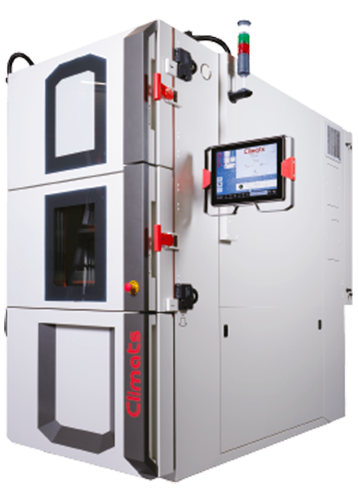
Evaluate product reliability under controlled temperature and humidity. IMPTRON CLIMETRON chambers support temperature cycling, damp heat, accelerated ageing and environmental conditioning, with mini, reach-in and customised configurations.
Product Description
IMPTRON CLIMETRON Climatic Test Chambers are engineered to expose test specimens to controlled and repeatable temperature and humidity conditions, helping evaluate product reliability, durability, environmental resistance, and performance under simulated climatic conditions.
These environmental test systems integrate heating, refrigeration, humidification, dehumidification, and forced-air circulation to provide controlled test environments. Depending on the application, chambers can be configured for temperature-only testing or combined temperature and humidity testing.
The chamber architecture, refrigeration system, heating capacity, humidification arrangement, airflow distribution, insulation, and control system are selected according to the required temperature and humidity range, test volume, specimen payload, temperature change rate, recovery performance, and applicable test standards.
CLIMETRON chambers are available in reach-in and customized configurations for temperature testing, humidity testing, climatic cycling, damp heat testing, accelerated aging, and environmental conditioning.
They support testing requirements across electronics, automotive and electric vehicles, batteries, aerospace and defense, semiconductor components, electrical assemblies, sensors and instrumentation, materials and polymers, medical devices, consumer products, and industrial applications.
Technical Capabilities
| Parameter | CLIMETRON |
|---|---|
| Chamber Type | Reach-In / Customized |
| Test Volume | Application dependent |
| Temperature Range | Up to −70°C to +180°C* |
| Humidity Range | 10 to 98% RH* |
| Temperature Stability | Application dependent |
| Temperature Uniformity | Application dependent |
| Humidity Stability | Application dependent |
| Temperature Change Rate | Application dependent |
| Air Circulation | Forced circulation |
| Cooling System | Air-cooled / Water-cooled |
| Refrigeration | Single-stage / Cascade / Customized |
| Heating | Electric heating |
| Humidity Generation | Controlled humidification |
| Dehumidification | Refrigeration-based / Customized |
| Control | IMPTRON NEXUS |
| Data Logging | Internal / USB / Network |
| Communication | Ethernet / Serial / Industrial protocols |
| Interior Construction | Stainless Steel |
| Test Shelves | Adjustable / Heavy-duty options |
Final performance depends on chamber configuration, test volume, payload, temperature/humidity conditions and test requirements.
Models
Models — Mini Series
| Model | Volume | Internal Dimensions (mm) | Ramp Rate | Configuration |
|---|---|---|---|---|
| CMD30 | 22 L | 300 × 250 × 300 | 2 | Desktop |
| CMD65 | 64 L | 400 × 400 × 400 | 3 | Desktop |
| CMF125 | 125 L | 500 × 500 × 500 | 2, 5 | Floor-standing |
Temperature ranges: CMD65: −35°C to +150°C; CMF125: −65°C to +150°C.
Humidity range: 10–98% RH within 10°C to 85°C for applicable CMD65 and CMF125 configurations.
Models — Reach-in Series
| Model | Volume | Internal Dimensions (mm) | Ramp Rate |
|---|---|---|---|
| CT250 | 247 L | 600 × 550 × 750 | 3, 5 |
| CT400 | 410 L | 700 × 650 × 900 | 3, 5, 10 |
| CT700 | 705 L | 900 × 870 × 900 | 3, 5, 10, 15 |
| CT1000 | 1,000 L | 1000 × 1000 × 1000 | 3, 5, 10, 15, 20 |
| CT1800 | 1,800 L | 1200 × 1250 × 1200 | 3, 5, 10, 15, 20 |
| CT3000 | 2,940 L | 1400 × 1500 × 1400 | 3, 5, 10, 15, 20 |
Available temperature ranges: −35°C to +180°C, −40°C to +180°C, −70°C to +180°C and −80°C to +180°C, depending on configuration.
Humidity range: 10–98% RH within 10°C to 85°C.
Customized chamber sizes and performance configurations are available on request.
Applicable Standards
Temperature Testing
- IEC 60068-2-1 — Cold
- IEC 60068-2-2 — Dry Heat
- IEC 60068-2-14 — Change of Temperature
Humidity and Climatic Cycling
- IEC 60068-2-30 — Damp Heat, Cyclic
- IEC 60068-2-38 — Composite Temperature/Humidity Cyclic Test
- IEC 60068-2-78 — Damp Heat, Steady State
Chamber Performance Verification
- IEC 60068-3-5 — Temperature Chambers
- IEC 60068-3-6 — Temperature/Humidity Chambers
Industry-Specific Requirements
- MIL-STD-810
- MIL-STD-883
- JESD22
- AEC-Q100
- AEC-Q200
- ISO 16750-4
- RTCA DO-160
- Customer-specific OEM specifications
Applicability: Applicability depends on the selected test method, chamber configuration, operating conditions, and validation procedure.
Key Features
- Wide temperature operating range
- Controlled temperature and humidity
- Temperature cycling capability
- Independently controlled heating and refrigeration
- Precision humidity control
- High-performance cascade refrigeration
- High-capacity electric heating system
- Optimized airflow for temperature uniformity
- Programmable temperature and humidity profiles
- Multi-step test programming
- Product temperature monitoring
- Automatic defrost management
- Independent temperature safety limits
- Door and system interlocks
- Alarm and fault diagnostics
- Data logging and test report generation
- Remote monitoring and communication
- Energy-efficient refrigeration options
- Customized test shelves and fixtures
- Application-specific electrical and instrumentation interfaces
Options
- Product thermocouples
- Additional temperature sensors
- Humidity sensors
- Additional access ports
- Product power supply
- Special specimen fixtures
- Dry-air purging
- LN₂-assisted cooling
- Gaseous nitrogen purging with flow meter
- Low-humidity system
- Product temperature monitoring
- Product protection interlock
- External DAQ interface
- Battery testing interface
- CAN interface
- Customized electrical feedthroughs
- Customized chamber dimensions
- High heat-load compensation
- Additional trays
- User door-open safety
Control & Instrumentation
IMPTRON NEXUS is an intelligent touchscreen-based chamber control system designed for automated climatic testing. It supports programmable temperature and humidity profiles, real-time monitoring, trend graphs, alarm management, data logging, and test reporting.
Display & User Interface
- 7-inch TFT colour touchscreen
- 800 × 480 WVGA resolution
- 16.7 million colours
- Projected capacitive multi-touch interface
- Multi-user, password-protected access
- Real-time graphical display
Test Programming & Control
- Up to 100 test programs
- Multi-step temperature profiles
- Temperature and humidity profile control
- Ramp and soak programming
- PID-based temperature control
- Humidity control
- Delayed test start
- Automatic test sequences
Monitoring & Data Management
- Real-time temperature, humidity, and product temperature monitoring
- Separate trend graphs for manual and profile operation
- Individual test reports
- Automatic PDF report generation
- USB and FTP data export
- Alarm and event history
- Condensation protection logic
- Automatic retention of factory and default settings
Connectivity & Communication
- 2 × Ethernet ports
- 2 × USB ports
- RS-232 / RS-485 / RS-422 communication
- Expandable serial communication modules
- VNC-based remote monitoring
- SD card support
Applications
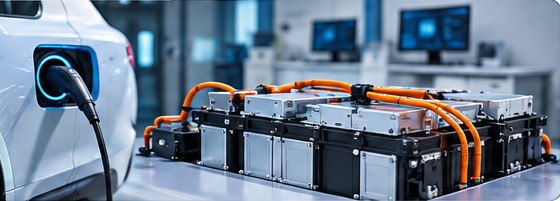
Automotive & Electric Vehicles
- Electronic control units (ECUs) and electronic assemblies
- Automotive sensors and connectors
- Displays and lighting systems
- Battery systems and components
- Power electronics
- Electric mobility components
Electronics & Semiconductor
- Integrated circuit (IC) packages
- Printed circuit boards (PCBs)
- Electronic assemblies
- Semiconductor components
- Solder joints and interconnections
- Connectors, displays, and sensors

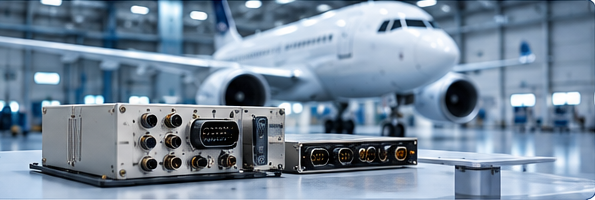
Aerospace & Defense
- Avionics systems
- Electronic modules
- Sensors and instrumentation
- Communication equipment
- Mission-critical electronics
- Control systems
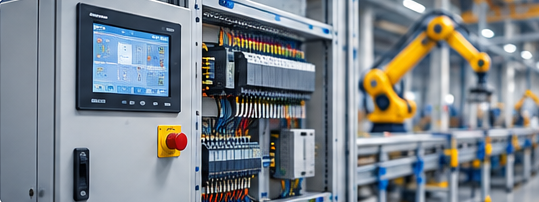
Industrial & Other Applications
- Electrical equipment
- Industrial instrumentation
- Materials, seals, and assemblies
- Consumer electronics
- Medical devices
- Industrial control systems
- Power equipment
More Information
What Is Climatic Testing?
Climatic testing is the process of exposing products, materials, and components to controlled temperature and humidity conditions to evaluate their performance, reliability, and durability under simulated environmental conditions.
Climatic testing helps identify potential effects such as:
- Thermal expansion and contraction
- Moisture absorption
- Corrosion and condensation
- Material degradation
- Seal deterioration
- Insulation degradation
- Component performance drift
- Solder joint and interconnection failures
- Accelerated aging effects
Test severity is determined by applicable standards and product specifications, including temperature and humidity limits, exposure duration, temperature change rates, dwell periods, recovery conditions, and the number of test cycles.
What Is a Climatic Test Chamber?
A climatic test chamber is a controlled environmental testing system designed to reproduce specified temperature and humidity conditions within an enclosed test space.
It uses heating, refrigeration, humidification, dehumidification, and air circulation systems to establish and maintain the required test environment.
Types of Climatic Testing
- Temperature Testing: Evaluates product performance under specified high- and low-temperature conditions.
- Temperature and Humidity Testing: Exposes specimens to controlled combinations of temperature and relative humidity.
- Temperature Cycling: Repeatedly exposes specimens to changing temperature conditions.
- Damp Heat Testing: Evaluates product resistance to humid environmental conditions.
- Accelerated Aging: Uses controlled environmental exposure to investigate potential aging-related effects.
- Environmental Conditioning: Prepares specimens under defined climatic conditions before testing or evaluation.
Available chamber configurations:
- Mini climatic test chambers
- Reach-in climatic test chambers
- Environmental Stress Screening (ESS) chambers with high temperature change rates
- Customized climatic test chambers
How IMPTRON CLIMETRON Works
01 — Set Environment
The required temperature, humidity, exposure duration, and test sequence are programmed through the IMPTRON NEXUS controller.
02 — Condition
Heating, refrigeration, humidification, and dehumidification systems establish the programmed environmental conditions inside the chamber.
03 — Test
The specimen is exposed to the specified conditions while chamber parameters are controlled and monitored throughout the test.
04 — Repeat / Complete
The programmed environmental conditions are repeated according to the test sequence until the required cycles are completed.
Environmental Test Sequence:
Set Environment → Condition → Test → Repeat Cycle